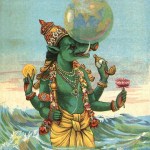
Dhīratā, Antifragility & Amor-Fati
I want to learn more and more to see as beautiful what is necessary in things; then I shall be one of those who makes things beautiful. Amor fati: Let that be my love henceforth! I do not want to wage war against what is ugly. I do not want to accuse; I do not even want to accuse those who accuse. Looking away shall be my only negation. And all in all and on the whole: some day I wish to be only a Yes-sayer.
– Amor fati, as originally thought of by Nietzsche. A paragraph from “Gay Science”
While interacting with Dr.Arvind (@longhandnotes on X, formerly twitter) on the Nietzschean ideal of Amor Fati (Latin:Love of/for fate), I got myself into a contradictory position on how we could live up to that ideal. I responded in conflict, via becoming a reflecting mirror, following tit for tat, giving back best to good and the worst to bad.
My position was biased due to various confrontations in childhood, where I was weak. I derived, at those times, that becoming strong is the ultimate virtue for a man. Discussed below are some points someone may find helpful in their journey.
Utility of śāstra-s & mumukṣā.
Deva-s have anugraha in various ways — I came across a pravacana by PP ŚrīRājendradāsajī on the same night while having the regular course of listening to various ācārya-s just before going into realms of nidrā. Ācārya explains the verse three from Vivekacuḍāmaṇī talking about Manuṣyatvam, Mumukṣatvam and Mahāpuruṣasaṁśrayaḥ:
दुर्लभं त्रयमेवैतद्देवानुग्रहहेतुकम् ।
मनुष्यत्वं मुमुक्षुत्वं महापुरुषसंश्रयः ॥ ३
There are three things which are rare and due to the grace of God — The human birth, longing for mokṣa and sannidhi of a mahāpuruṣa.
It was not in much time that I got reminded of chapter 2 of BhāgavadGītā where ŚrīKr̥sṇa has emphasised much about sukhadukhādi dualities of life and I was awestruck by the fact that how much “swādhyāya” really has been a learning if learnings from it have not reflected in real life?
Mumukṣā is what drives a dhārmika. It removes the ahaṁ bhāva for a learner and that’s what a dhārmika must aspire, leaving aside all the ego. There’s no mumukṣā without titikṣā and vice versa.
Titikṣā
- Br̥hadāraṇyaka śruti:
“तस्मादेवंविच्छान्तो दान्त उपरतस्तितिक्षुः समाहितो भूत्वात्मन्येवात्मानं पश्यति सर्वमात्मानं पश्यति…”
Yajñavalkya instructs Janaka. The term Titikṣu is embedded right alongside śama (mental calmness) and dama (sense control). The Upaniṣad establishes that the intellect cannot perceive the subtle Ātman if the mind is continuously agitated by external discomforts.
- BG 2.14:
“मात्रास्पर्शास्तु कौन्तेय शीतोष्णसुखदुःखदाः । आगमापायिनोऽनित्यास्तांस्तितिक्षस्व भारत” ॥ १४ ॥
Śrī Kr̥sṇa grounds titiksā in Anitya (impermanence). The instruction tāṃs-titikṣasva (endure them) is a direct command stating external phenomena are inherently fleeting, reacting to them with severe emotional volatility is illogical.
- VC 24 & Tattva-bodha.
“सहनं सर्वदुःखानामप्रतीकारपूर्वकम्। चिन्ताविलापरहितं सा तितिक्षा निगद्यते ॥ २४ ॥
The verse from vivekacuḍāmaṇī expands on what titikṣā is: The endurance of all afflictions without resorting to countermeasures (apratīkāra-pūrvakam), and without anxiety or lamentation (cintā-vilāpa-rahitaṁ), is declared to be Titikṣhā.
“तितिक्षा का ? शीतोष्णसुखदुःखादिसहिष्णुत्वम्” ।
What is titikṣā? It is the endurance of pairs of opposites, similar to dualities that ŚrīKr̥ṣṇa emphasized, like heat and cold, pleasure and pain, etc.
Dilemma : Dhīra or Sāhasī?
We often like to pose ourselves as sāhasī—daring. But for a seeker it’s a resistance. We shall always strive for progression thus:
- Gītā just after grounding titiksā in Anitya, it goes ahead on explaining who is a dhīra in 2.15:
“यं हि न व्यथयन्त्येते पुरुषं पुरुषर्षभ । समदुःखसुखं धीरं सोऽमृतत्वाय कल्पते “॥ १५ ॥
ŚrīKr̥ṣṇa establishes the benchmark for a Dhīra. It is not someone who actively seeks out danger, nor someone who is physically immune to pain. A Dhīra feels the physical sensation of cold or heat, and experiences the worldly events of success and failure, but their inner intellect remains completely un-distressed (na vyathayanti).
Continuing the same line of thought, in chapter 18:
- यया स्वप्नं भयं शोकं विषादं मदमेव च । न विमुञ्चति दुर्मेधा धृतिः सा पार्थ तामसी ॥ १८.३५ ॥
ŚrīKr̥ṣṇa defines the person exhibiting this trait as durmedhā (one of foolish intellect). Those with mada endure immense suffering (śoka and vishāda), but it is a pointless endurance born of delusion, not a noble sacrifice. That fortitude by which a foolish person does not give up sleep, fear, grief, despair, and arrogance. That fortitude is Tamasic.
- Another important reference to dhīra is found in Kumārasaṁbhavam of Kālīdāsa:
“विकारहेतौ सति विक्रियन्ते येषां न चेतांसि त एव धीराः” ॥
They alone are the truly steadfast, whose minds are not disturbed even when there is a potent cause for disturbance.
Differentiating between an nihilist existentialist position and dhārmika forbearance :
Forbearance in all its speciality, can only be claimed by those having strength to retaliate. In words of Ramdhari Singh “Dinkar” —
क्षमा शोभती उस भुजंग को
जिसके पास गरल हो
उसको क्या जो दंतहीन
विषरहित, विनीत, सरल हो।
Also, it takes as much strength, if not more, to go on forbearing something than to retaliate without being a negatively positioned existentialist. We have to make sure dhīratā has to be rooted in sattva & NOT in tama.
More instances and motivation for reading the text tirukkuRaL:
tirukkuRaL 130 : “katam kāttu, kaṟṟu, aṭaṅkal āṟṟuvāṉ cevvi aṟam pārkkum āṟṟiṉ nuḻaintu”.
→ The God of righteousness seeks one who is on guard against anger and attains self-control through knowledge.
Specially for brāhmaṇas/sādhaka-s, it is famously said: “Brāhmaṇa-s must adorn kṣhamā”:
tirukkuRaL 152 : “poṟuttal, iṟappiṉai eṉṟum; ataṉai
maṟattal ataṉiṉum naṉṟu”.
वेङ्कटकृष्ण : अच्छा है सब काल में, सहना अत्याचार ।
फिर तो उसको भूलना, उससे श्रेष्ठ विचार ॥
Put up with one’s transgressions. Far greater than one’s forbearance is one’s oblivion of them.
The link to the text is pinned in the bibliography section.
Projecting Amor Fati to its convexity via Antifragility:
For those unaware, Taleb’s famous triad of how systems respond to stress, volatility, and disorder are as follows:
- The Fragile: Things that break under stress.
- The Robust: Things that endure stress and stay the same (like a rock).
- The Antifragile: Things that actually grow, learn, and get stronger from stress and disorder.
→ The ordinary mind is strictly fragile and when duḥkha is encountered, it shatters. Similarly, Sāhasa is a fragile system masquerading as an anti-fragile system. Taleb argues that systems lacking feedback loops are doomed to catastrophic failure. The stubborn person ignores the feedback of reality i.e suffering due to a lack of Aviveka. So, when they finally break, they break completely.
→ Taleb defines an antifragile strategy as having “convexity”, a state where one has capped their downside but left their upside infinite implying reducing losses and putting oneself at a position from where one can gain immensely. Thus it would not be false to observe that Titikṣā (forbearance) is the psychological equivalent of convexity.
It is only through dhīratā that one saves himself from unnecessary thinking of past & future. By not wasting energy on emotional retaliation or lamentation a dhīra would invest that mental capital into self-inquiry, whose infinite upside can be Mokṣa.
→ Yet another important aspect of an antifragile system is that it needs volatility to thrive and depriving it of stressors makes it weak i.e sukhduḥkhādi dualities are important in for someone willing to become antifragile as what even it will be antifragile for?
We see this exact principle in Kālidāsa’s definition of the Dhīra. For the fragile person, the catalyst for disturbance, (e.g. massive temptation) breaks the person himself into committing unjust actions. For the Dhīra, it is nourishment and he must use it to burn the vāsanā-s.
Conclusion & Bibliography:
The aim of my contemplation was to come out of a contradictory and avivekī position on sāhasa vs dhīratā, which leads me into frequent conflicts. About swādhyāya of śāstra-s, I found that any reading must be done as such as to derive applications from the śabda, no meaning reading them otherwise. Forbearance has to be a pravitti, not having it is a saṁskārajanyadoṣa and it must be cured by driving out(nivritti) of anger, feeling of vengeance etc. There are various things readers may derive from aforementioned points from śāstra-s, the existentialist position of Nietzsche and Anti-fragility.
Here is a list of supplementary materials for someone willing to go forward:
- tirukkuRaL : (a)https://vishvasa.github.io/bhAShAntaram/tamiL/padyam/tiruk-kuraL/sarva-prastutiH/1_a.RhattuppAl_dharmakANDaH/2_illa.Rhaviyal/12_pO.RhaiyuDaimai/
(b) https://share.google/WxD7MsS8K8YDvexyJ
- Thread on Universal Maitra by Dr.Arvind Iyer
- Lecture of PP RājendraDāsaJī Mahārāja can be accessed here: https://youtu.be/iqzAMGsvuZE?si=Mpx6VtgKCzx0uMau